


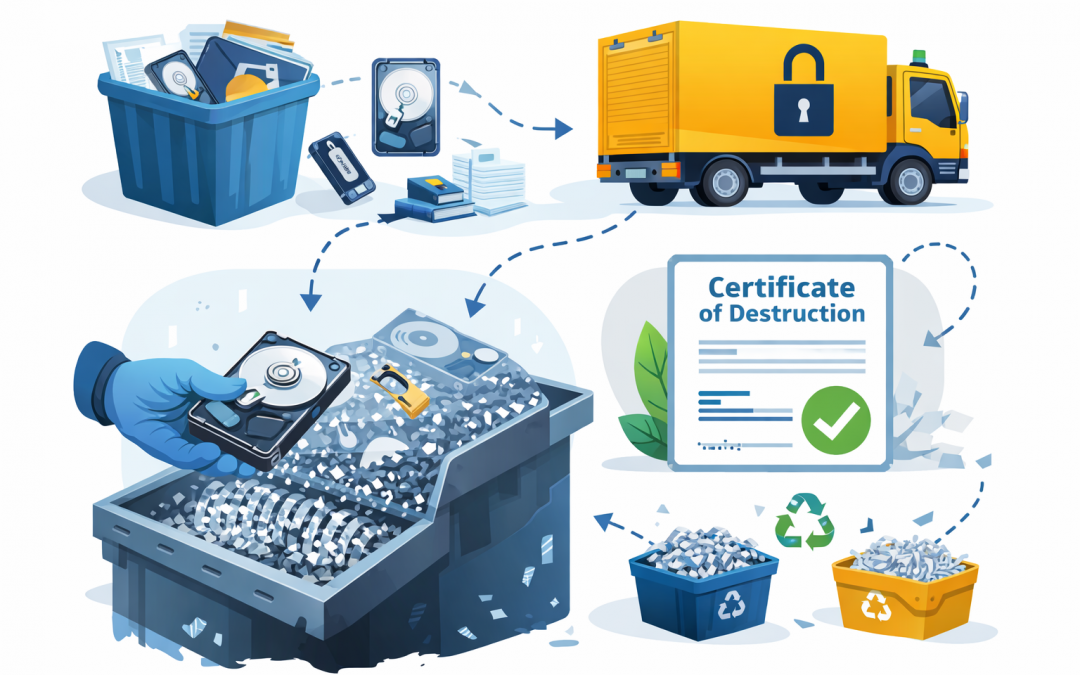
When businesses invest in data destruction services, one of the most common questions is simple: what actually happens to the data once it leaves your premises?
You’re right to consider this. After all, you’re trusting a third party with sensitive information that could impact your company’s reputation, status regarding compliance and relationships with clients.
At MISL, we believe transparency is essential. In this guide, we’ll walk you through exactly what happens during and after secure data destructions, and how we ensure your information is handled safely at every stage.
Why Proper Data Destruction Matters
Improper disposal of documents or digital media can lead to:
- Data breaches
- Identity theft
- Financial penalties under GDPR
- Loss of customer trust
Simply deleting files or throwing away paperwork isn’t enough. Why? Because data can often be recovered unless it’s destroyed using certified methods.
That’s where our professional data destruction services come in.
Step 1: Secure Collections and Chain of Custody
The process begins the moment we take responsibility for your data.
At MISL, we operate a strict chain of custody, which means:
- All materials are tracked from collection to destruction
- Secure containers are used for transport
- Access is restricted to authorised personnel only
Whether we’re collecting paper records, hard drives or other media, everything is logged and monitored. This ensures full accountability and reduces any risk of data being lost or mishandled.
For businesses already using our records archiving or document scanning services, this step is seamlessly integrated into your existing workflow.
Step 2: Secure Transportation
Once collected, your materials are transported securely to the appropriate facility.
We use:
- GPS-tracked vehicles
- Locked containment systems
- Trained, vetted staff
Security doesn’t stop at your office door. Maintaining control during transit is a key part of protecting your data.
Step 3: Verified Destruction Methods
The actual destruction process depends on the type of data being handled.
Paper Documents
Confidential documents are destroyed using industrial-grade shredding equipment. This reduces paper into tiny, unreadable fragments that cannot be reconstructed.
Digital Media
For items such as hard drives, USBs, and backup tapes, we use methods including:
- Physical destruction (crushing or shredding devices)
- Secure data wiping (where appropriate)
The goal is always the same: ensure that data is completely irretrievable.
At MISL, we follow industry best practices and compliance standards to guarantee that your data is destroyed beyond recovery.
Step 4: Certification of Destruction
One of the most important parts of the process is documentation.
After destruction, we provide a Certificate of Destruction, which confirms:
- What was destroyed
- When it was destroyed
- How it was destroyed
- That it meets compliance requirements
This certificate is vital for audits, regulatory compliance, and internal record-keeping. It gives you peace of mind that your business is meeting its legal obligations under GDPR and other data protection laws.
Step 5: Responsible Recycling and Sustainability
Destroying data doesn’t have to mean unnecessary waste.
At MISL, we ensure that all materials are handled responsibly after destruction:
- Shredded paper is recycled
- Electronic components are processed in line with environmental regulations
This means you’re not only protecting your data, but also contributing to a more sustainable approach to waste management.
How Data Destruction Fits Into the Bigger Picture
The destruction of data is not a standalone task. It’s part of a wider information lifecycle.
At MISL, we support businesses at every stage of that lifecycle:
- Data entry to digitise information accurately
- Document scanning to reduce reliance on paper
- Digital mailroom services to streamline incoming communications
- EDMS and cloud storage solutions for secure access and management
- Records archiving for compliant long-term storage
When the time comes to dispose of data, we already understand your systems and processes. This allows us to deliver a joined-up, efficient service.
Why Transparency Builds Trust
Many organisations worry about what happens ‘behind the scenes’ when they outsource data destruction.
We understand that concern, which is why we prioritise:
- Transparency
- Full documentation
- Open communication
Our clients know exactly how their data is handled at every stage; there are no grey areas, and no shortcuts.
On-Site vs Off-Site Destruction
Depending on your needs, we offer flexible options.
On-Site Destruction
We can carry out destruction at your premises, allowing you to witness the process in real time.
Off-Site Destruction
Alternatively, materials can be securely transported to our facility for destruction under controlled conditions.
Both options meet strict security standards. The right choice depends on your operational needs and compliance requirements.
Who Benefits Most From Data Destruction Services?
In short, any organisation that handles sensitive information.
This includes:
- SMEs and large enterprises
- Healthcare providers
- Legal and financial firms
- Public sector organisations
If your business stores customer data, employee records or confidential documents, secure destruction isn’t optional, it’s essential.
Why Choose MISL for Data Destruction Services?
At MISL, we don’t just destroy data, we manage it responsibly from start to finish.
What sets us apart:
- End-to-end information management services
- Secure, compliant processes
- Integration with your existing workflows
- A focus on both security and efficiency
Because we offer a full suite of services, from digitisation to storage and destruction, we’re able to provide a more streamlined and reliable solution than standalone providers.